Abstract
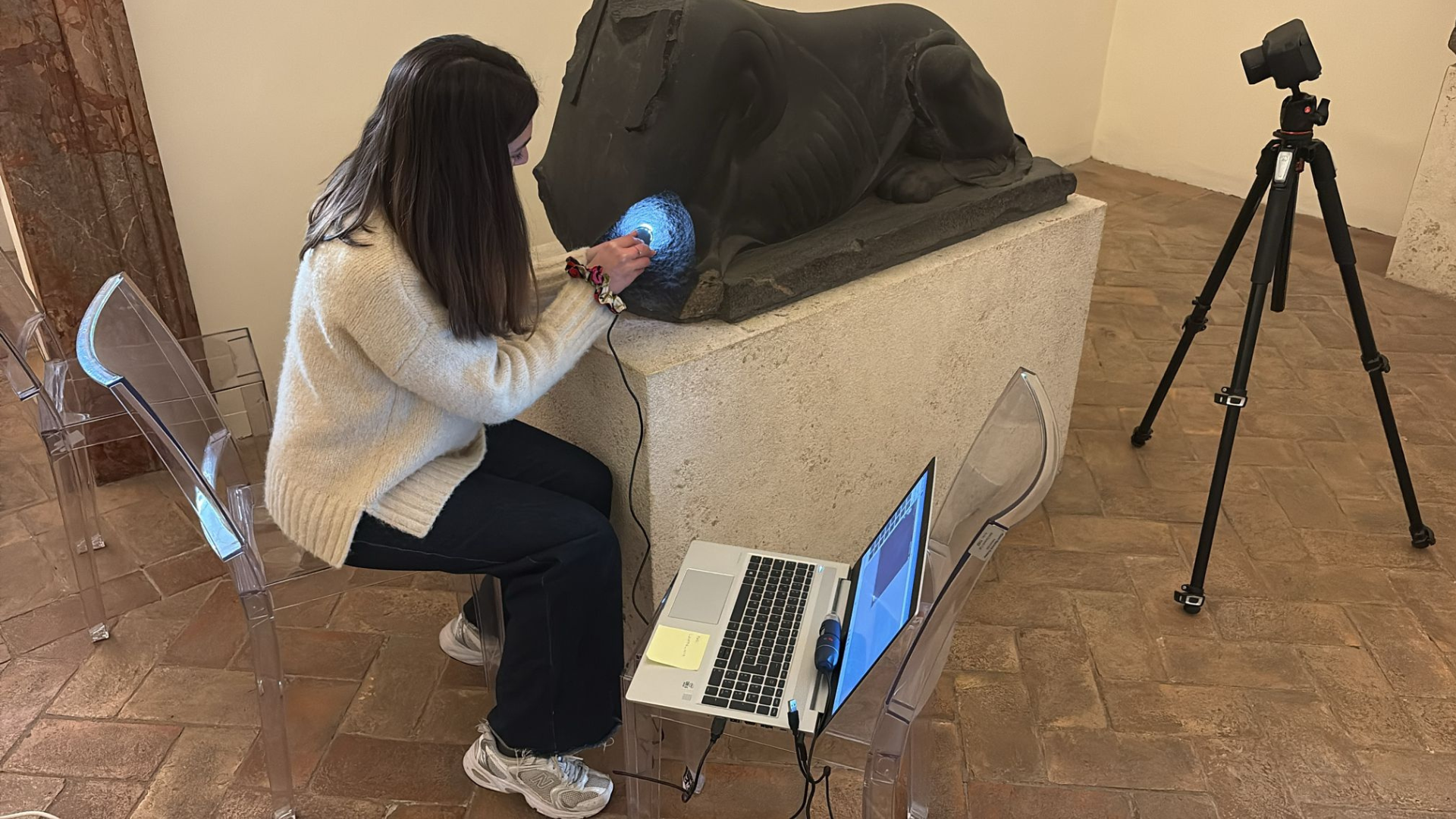
Up to the 1930s, the Italian pictorialism movement dominated photography, and many handcrafted procedures started appearing. Each operator had his working method and secrets for creating special effects that moved away from the standard processes. Here, a methodology combining X-ray fluorescence and infrared analysis spectroscopy with unsupervised learning techniques was developed on an unconventional Italian photographic print collection (the Piero Vanni Collection, 1889–1939) to unveil the artistic technique by extracting spectroscopic benchmarks. The methodology allowed the distinction of hidden elements, such as iodine and manganese in silver halide printing, or highlighted slight differences in the same printing technique and unveiled the stylistic practice. Spectroscopic benchmarks were extracted to identify the elemental and molecular fingerprint layers, as the proteinaceous binder obscured the oil-based prints. It was identified that the pigments used were silicates or iron oxide introduced into the solution or that they retraced the practice of reusing materials to produce completely different printing techniques. Four main groups were extracted, recreating the ‘artistic palette’ of the artist’s unconventional photography. The four groups were the following: (1) Cr, Fe, K, potassium dichromate, and gum arabic bands characterized the dichromate salts; (2) Ag, Ba, Sr, Mn, Fe, S, Ba, gelatin, and albumen characterized the silver halide emulsions on the baryta layer; (3) the carbon prints were benchmarked by K, Cr, dichromate salts, and pigmented gelatin; and (4) the heterogeneous class of bromoil prints was characterized by Ba, Fe, Cr, Ca, K, Ag, Si, dichromate salts, and iron-based pigments. Some exceptions were found, such as the baryta layer being divided into gum bichromate groups or using albumen in silver particles suspended in gelatin to underline the unconventional photography at the end of the 10th century.