
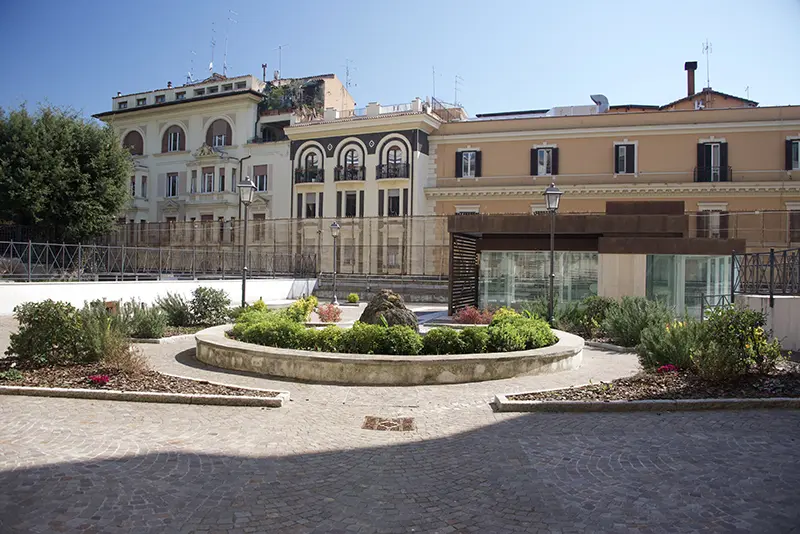
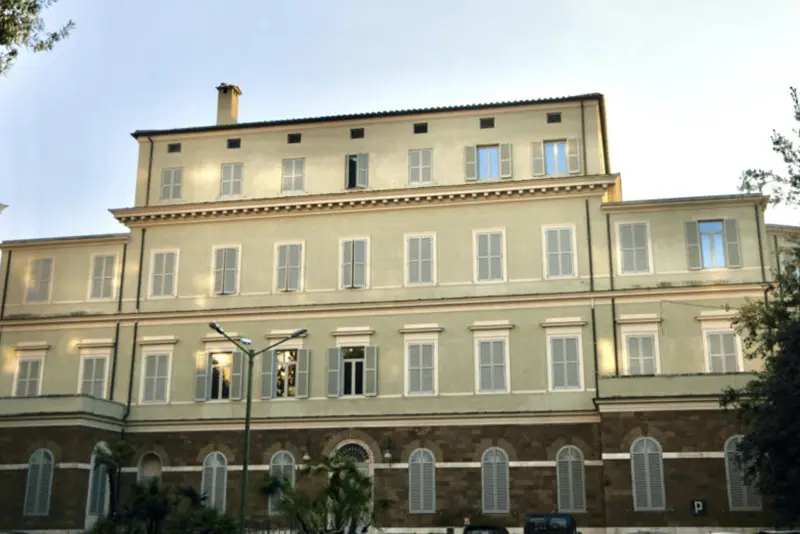



This morning, a six-wheel-drive off-road vehicle crossed the gates of the Viminale to stop in front of the building via Panisperna. It was one of the cars used for the Transglobal Car Expedition, a project combining a passion for adventure with scientific research.
Starting in January from New York, the expedition aims to circumnavigate the earth, crossing both Poles and collecting important data for the earth’s future, from measurements of the polar ice caps to the detection of cosmic rays coming from distant regions of our universe.
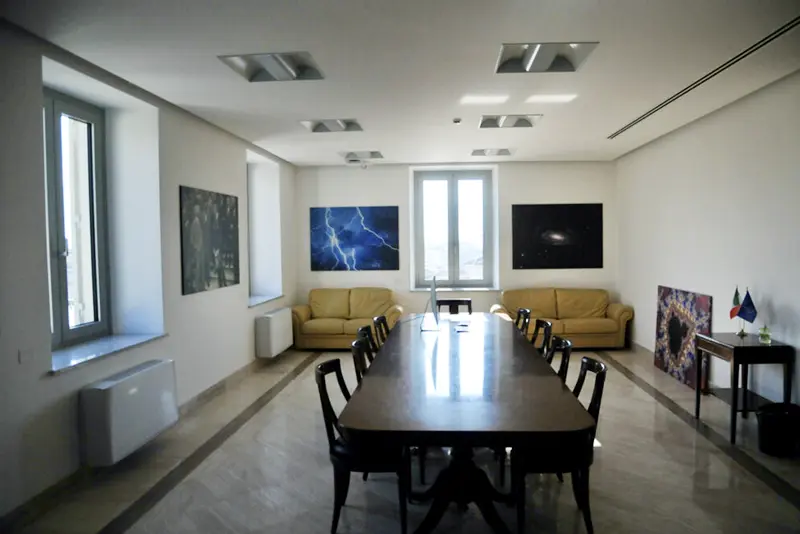
The Enrico Fermi Research Center, which has collaborated on various occasions with Polarquest, one of the initiative’s partner projects, through EEE—Extreme Energy Events—Science in Schools, was chosen to host the conference of the Roman stage, moderated by Paola Catapano.
In introducing the event, CREF president Angela Bracco highlighted the expedition’s scientific contribution and the importance of discussing the results and prospects in a historic place for physics, where Fermi’s legacy is still alive.
Among the speakers, pilot Andrew Comrie-Picard talked about the human and technical difficulties that the team faced; Tommaso Parrinello of ESA discussed the evidence of the ice melting and the possible consequences for the planet’s future. Marco Garbini of CREF and James Devine of CERN explained the importance of cosmic ray measurements at far northern latitudes.
A special guest was astronaut Paolo Nespoli, who gave a moving and precious testimony on light pollution seen from space. The conference was concluded by Rosy Mondardini, who presented a Citizen Science project to spread awareness among the population of the damage caused by this type of pollution.