
research
The Enrico Fermi Research Center - CREF promotes original and high-impact lines of research, based on physical methods, but with a strong interdisciplinary character and in relation to the main problems of the modern knowledge society.
People
third mission
The CREF was born with a dual soul: a research centre and a historical museum. Its aim is to preserve and disseminate the memory of Enrico Fermi and to promote the dissemination and communication of scientific culture.

news
Publications, news, press review. For interviews, filming, and press contacts, please write to comunicazione@cref.it

third mission
the museum
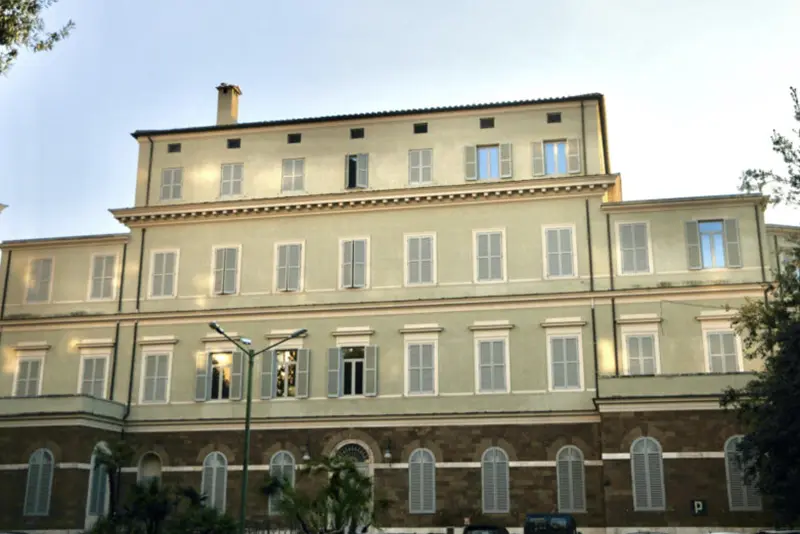
The Enrico Fermi Museum is housed on the ground floor of the monumental complex in via Panisperna, which has served as the headquarters for CREF since 2019 following a careful and rigorous historical restoration.
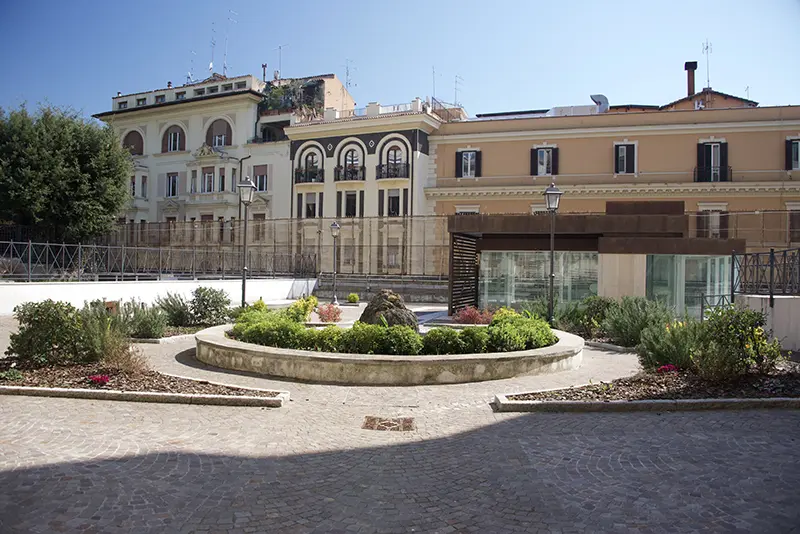
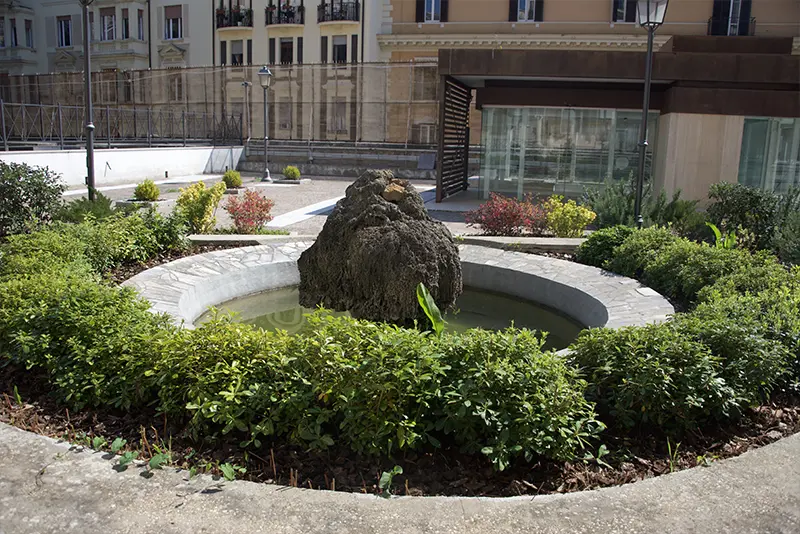
The building itself is an integral part of the museum itinerary. Key elements include the internal courtyard—at the center of which stands the famous “goldfish fountain” (recognized as the first Italian historical site of the European Physical Society since 2012); the entrance staircase, immortalized in 1931 during the first international congress on Nuclear Physics attended by the most renowned theoretical physicists of the time; and the broad vaulted corridors on the first floor, through which Fermi and his collaborators ran during their 1934 experiments on neutron-induced radioactivity. As is well known, these experiments earned Fermi the Nobel Prize in Physics in 1938.
History
The Fermi Museum was established to preserve and disseminate the historical memory surrounding Enrico Fermi and his collaborators, as well as the history of the Royal Institute of Physics—from its founding at the end of the 19th century until 1936, when the Institute relocated to Sapienza’s new headquarters.
In 2013, a working group comprising physicists and historians of physics was formed to define the scientific content of the future Museum housed within the via Panisperna complex. The result is a historical-scientific journey that retraces Fermi’s life and discoveries from Rome to America across roughly ten key stages. Visitors can immerse themselves in an engaging and captivating journey that innovatively combines physical artifacts and traditional panels with modern multimedia technologies, including graphical displays, interactive panels, touchscreens, and holographic projections.
To evaluate the effectiveness of the chosen solutions, a temporary exhibition titled “Enrico Fermi – A Creative Balance Between Theories and Experiments” was organized in 2015 for the Genoa Science Festival. With slight modifications and under the title “Enrico Fermi – Dual Genius Between Theories and Experiments”, the exhibition ran from February 10 to May 22, 2016, at the former Church of San Mattia in Bologna, supported by the city’s Museum Network. Both exhibitions enjoyed great public success, attracting approximately 15,000 visitors each, including students from primary through high school.
The Museum Today
Today, at its permanent home, the exhibition has become a permanent historical museum of physics. Fermi’s legacy, his extraordinary role as a mentor and giant of 20th-century physics, and his remarkable scientific achievements—the fruits of an exceptionally creative mind “in balance” between theory and experiment—are vividly displayed along the tour titled: “The Scientific Legacy of Enrico Fermi”.
The organization, implementation, and management of the Museum are overseen by a committee of researchers, coordinated by Dr. Miriam Focaccia under the supervision of the Scientific Director.
Opening Hours & Access
Open exclusively by reservation, the Museum offers tailored itineraries for schools as well as the general public (monthly open days and associations).
Outreach Activities
The Museum actively engages research staff in outreach and public engagement activities. It participates in science festivals, sets up workshops, interactive exhibits, and temporary displays, organizes lectures, presentations, and debates on the history of physics, and acts as an information hub for media productions related to the history of via Panisperna.
It designs tailored programs for schools, including work-study programs (PCTO) and interactive visits to CREF’s research laboratories, enriching the overall museum experience.
It promotes networking initiatives through collaborations with prestigious Italian and international museum institutions (including AMSI, the Curie Museum, the Sapienza Physics Museum, the Egyptian Museum of Turin, and IDIS – Città della Scienza).
National and International Collaborations
Sapienza University of Rome
Tor Vergata University of Rome
Roma Tre University
CNR (National Research Council)
Alma Mater Studiorum – University of Bologna
Amaldi Archive, Department of Physics, Sapienza
INFN (National Institute for Nuclear Physics)
Genoa Science Festival
Rai Storia
Rai Educational
RaiPlay Sound
TG3 Leonardo
Focus Mediaset
BBC
NetTogether
Maker Faire Rome
Nymphaeum Museum, Rome
ENPAM 5×1000 Foundation
DMO ES.CO. Esquilino Comunità, Porta di Rome
SIF (Italian Physical Society)
SISFA (Italian Society for the History of Physics and Astronomy)
EPS (European Physical Society)