





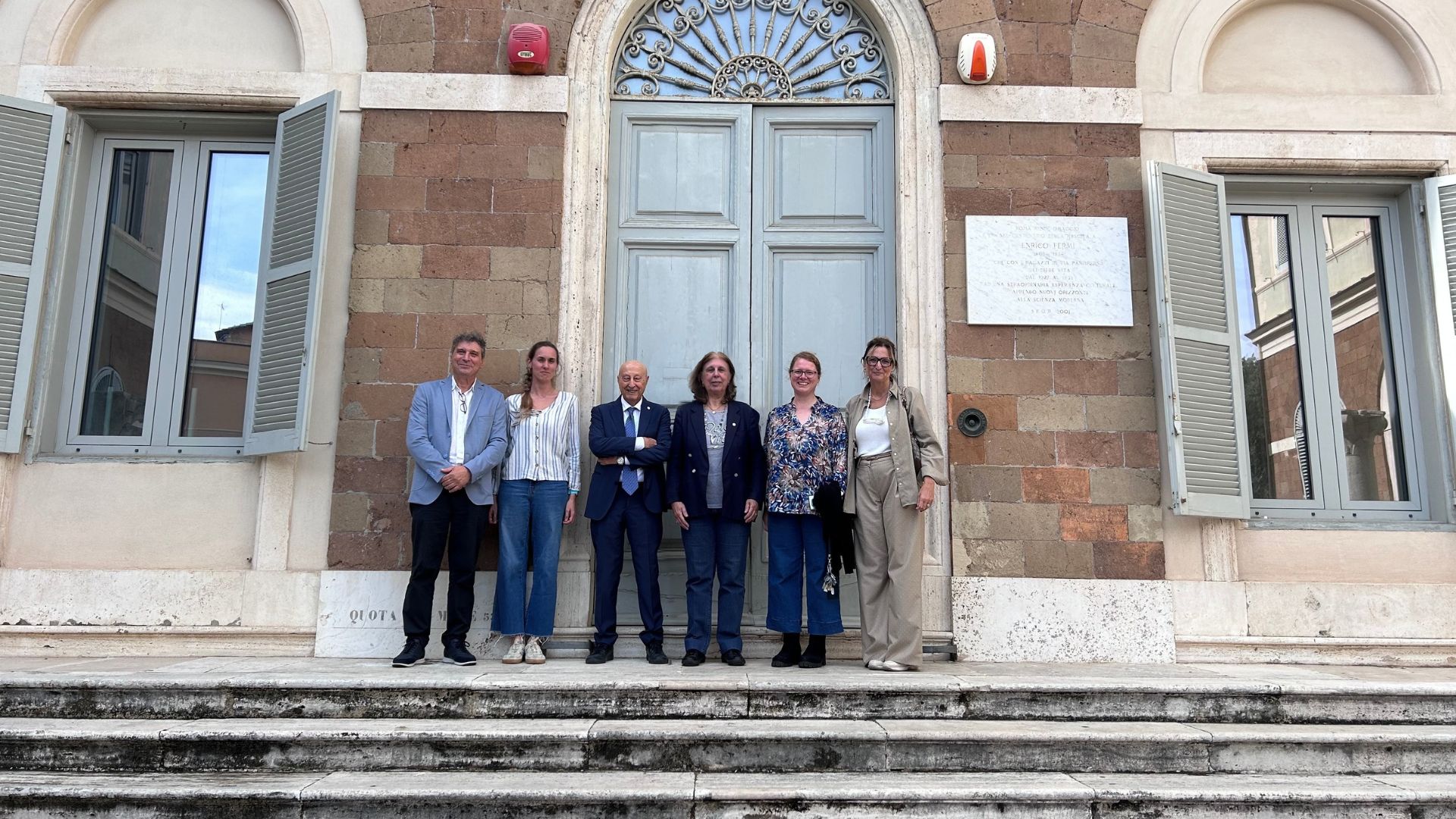

13 February 2026. The Centro Studi e Ricerche “Enrico Fermi” (CREF) in Rome hosted the CODE project (Coupling Opinion Dynamics with Epidemics) concluding workshop: a day dedicated to unpacking how the viral spread of ideas influences the viral spread of disease.
The CODE project was born from a simple but profound observation: an epidemic is not just a biological event; it is a social one. By studying the relationship between opinion dynamics (shaped by online debates) and epidemic management, the project sought to answer two critical questions: How does social media influence the success—or failure—of containment policies? Can emergency government actions lead to long-term political radicalization and polarization?
To answer these questions, researchers delved into the friction between our online personas and our physical interactions, seeking the “divergences” that shape how we behave during a crisis.
One of the project’s major successes is a new framework for detecting online ideological communities. Rather than using generic algorithms, the CODE team developed a four-step process method that allows researchers to see exactly how political affiliations dictate what information we consume and how we react to public health mandates.
To model how diseases spread through “word of mouth” or physical contact, the team explored meso-scale mixing patterns. Using geometric random networks, they demonstrated that community structures must be intentionally “enforced” within a model to accurately reflect reality. By using an entropy-based approach, they ensured these models remained realistic without inadvertently adding “ghost” features to the data.
In a world of lockdowns and mandates, not everyone follows the rules. The project introduced a Heterogeneous SIR model that accounts for “ordinary” and “misbehaving” individuals.
Using a modified SIS (Susceptible-Infectious-Susceptible) model, the project addressed waning immunity. The research found that when vaccination capacity is limited, there is a precise “threshold” for distribution. Below this threshold, the most effective strategy is to focus solely on “first doses” rather than attempting full cycles for a smaller group.
The workshop featured three intensive sessions chaired by Sandro Meloni (CNR), Stefano Guarino (CNR), and Fabio Saracco (CREF). The day concluded with institutional greetings from Federico Giove and a final synthesis by Stefano Guarino, followed by a private tour of the Enrico Fermi Museum. While the CODE project officially wraps up, the models and frameworks developed here will serve as a vital toolkit for policymakers facing the next great intersection of social debate and public health.
Find here the Programme