
la ricerca This project explores the transformative potential of Artificial Intelligence (AI) through an interdisciplinary approach that integrates computer science, network science, economics, and sociology. On one hand, we study the limitations and potential of AI to understand social, technological, and economic dynamics; on the other, we apply these models to conduct innovative investigations into […]
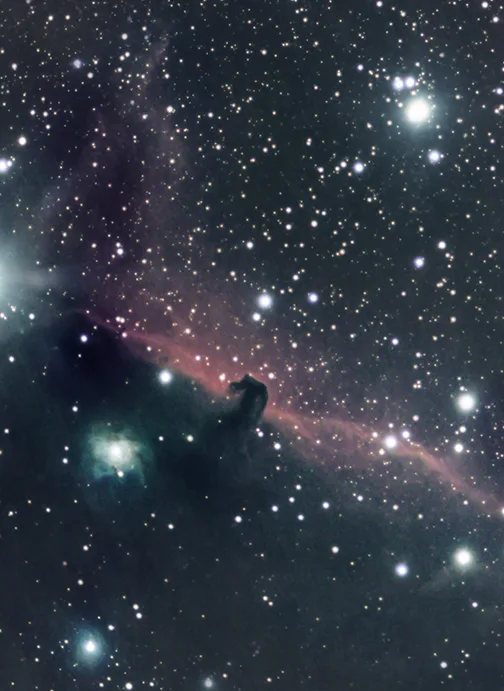
the research The study of the nucleosynthesis of elements found on Earth and, more broadly, in the universe, is a fundamental area of research aimed at understanding the production mechanisms of various elements. This includes both the lighter elements (hydrogen, deuterium, helium, lithium) created during Big Bang Nucleosynthesis, and the heavier ones, synthesized within stellar […]
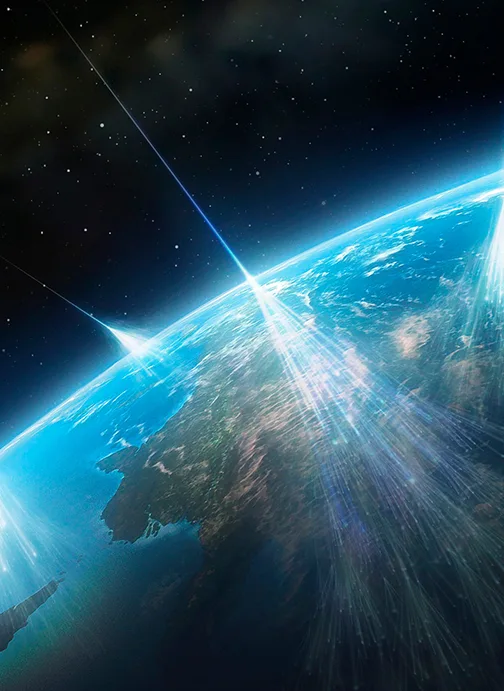
the research The Extreme Energy Events (EEE) Project – “Science in Schools” is an experiment for the detection and study of cosmic rays at ground level, combined with an innovative program for the dissemination of scientific culture. It involves the installation of cosmic muon telescopes in Italian schools: students and teachers take part in all […]

the research Ecco una traduzione professionale, fluida e ottimizzata per il web, che mantiene il tono accademico e scientifico del testo originale: The Statistical Physics and Complex Systems in Natural Sciences project is structured into closely interconnected lines of research, focused on the multiscale understanding and modeling of natural complex systems. The main directions include: […]
the research This project explores the transformative potential of Artificial Intelligence (AI) through an interdisciplinary approach that integrates computer science, network science, economics, and sociology. On one hand, we study the limitations and potential of AI to understand social, technological, and economic dynamics; on the other, we apply these models to conduct innovative investigations into […]

the research In the course of 2025, our research activity was structured around two main lines of investigation: (i) the kinematics and dynamics of the Milky Way and several irregular external galaxies; (ii) the study of the large-scale structure of the universe. Regarding the first area, we analyzed the kinematics of the Milky Way outside […]

the research The project applies the principles and methodologies of condensed matter physics to archaeological, artistic, and conservation issues by developing analytical protocols based on the spectroscopic and structural characterization of materials and the integration of Machine Learning techniques. The objective is to contribute to the study of composite materials of historical and artistic significance […]

la ricerca Physics, through the theory of complex systems and statistical physics, has provided essential quantitative tools to tackle socio-economic challenges that classical disciplines often fail to interpret. While it is not possible to conduct direct experiments, time series and statistical properties can be analyzed to predict the collective behavior of systems. With this vision […]

the research The project focuses on the research conducted in Rome by those physicists who, despite frequenting the Physics Institute of Rome, were not part of the inner circle of the “Ragazzi” (Boys) gathered around the figure of Enrico Fermi, or who, despite being part of it, were in Rome for a very limited period […]
the research The project, conceived within the context of the renovated historic headquarters of the Historical Museum of Physics and the “Enrico Fermi” Research Center (CREF), aims to retrace the history of the Royal Institute of Physics during the period when it was located in Via Panisperna. It preserves and disseminates the memory of its […]

